
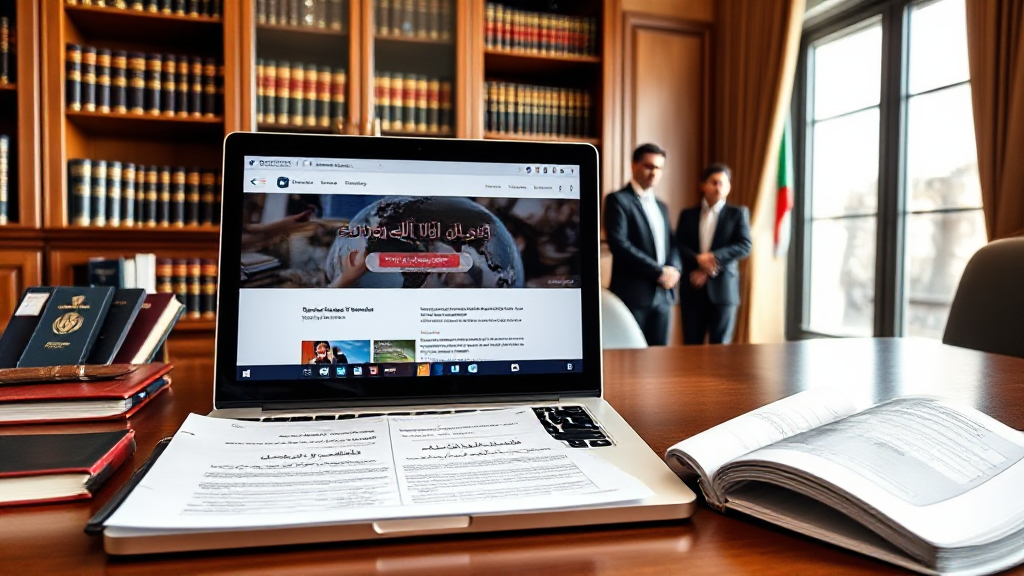
Why Russian ‘Read More’ Phrases Appear on English Citizenship Pages
A Persian-speaking reader lands on an English-language citizenship page and sees a line that reads mehr auf unserer Website erfahren. The words are German, the page is English, the reader is Iranian, and the law firm behind the site works with clients from several language communities at once. The immediate reaction is hesitation: if the site cannot keep its languages straight, can it keep a citizenship case straight? That hesitation is understandable, but it usually misreads what is actually happening on the page.
This is a translation and audience-expectation problem, not a competence problem. The phrase in question is a leftover from a Russian-language content template that was later rendered into German, then carried into an English interface. Understanding that chain of custody helps readers decide what a page is really telling them.
The Russian Template Behind a German Phrase
Russian legal and marketing content has a long habit of ending sections with an invitation to continue reading on the site. The Russian original is something along the lines of узнать больше на нашем сайте — literally “find out more on our website.” When agencies localize Russian content into German, the natural rendering is mehr auf unserer Website erfahren. It is a correct German translation of a Russian formula, and it carries the same function: a soft prompt to move deeper into the site.
The trouble starts when that German string is reused as a placeholder in an English build. The translator is no longer translating Russian into German; they are translating Russian into English, but the German block is already sitting in the template. Nobody removes it because it looks like content, not like a bug. On a citizenship site serving Iranian nationals, that leftover can sit next to genuinely important material about dual citizenship rules, investment thresholds, and document requirements.
For a reader deciding whether to trust a firm with a passport application, the mismatch feels bigger than it is. It is a content operations artifact, the same way a stray font or an untranslated button is an artifact. It says something about the publishing workflow, and very little about the legal work.
What Iranian Readers Actually Expect From a Citizenship Page
Persian-speaking audiences researching dual citizenship tend to arrive with specific questions. They want to know whether Iran permits dual nationality in practice, how a second passport affects military service obligations, and which jurisdictions accept Iranian applicants without creating new complications. They are used to reading across languages, often switching between Persian, English, and sometimes Russian or Turkish sources. A German phrase on an English page is not shocking on its own; what matters is whether the surrounding content answers their questions.
The expectation gap appears in two places. First, readers expect that a page addressed to them will be written in one consistent language. Second, they expect that any foreign-language fragment is there for a reason — a quoted law, a named program, a document title. When the fragment is just a navigation prompt, it reads as noise.
A practical reading rule helps here. When you encounter a stray phrase, check whether the rest of the page delivers substance: jurisdiction names, eligibility criteria, processing timelines, and clear contact routes. If it does, the phrase is cosmetic. If the page is thin everywhere, the phrase is a symptom of a larger problem. Global Citizenship Lawyers, for example, presents its German-language entry point as a deliberate localization for German-speaking audiences rather than an accident, which is a different situation from a template leftover.
How to Read a Multilingual Citizenship Site Without Losing Trust
Multilingual publishing is normal in immigration law because the client base is international. A firm handling second citizenship by investment across more than a dozen jurisdictions will inevitably maintain content in several languages. The question for a reader is not whether other languages appear, but whether the language you need is complete and current.
Start by locating the language switcher. If a site offers a German version, a Persian-speaking reader can still use the English version and treat the German pages as a secondary reference. If the switcher is broken or the translated pages are empty shells, that is a genuine signal worth noting.
Next, look at how the site handles jurisdiction-specific detail. Dual citizenship rules differ sharply between countries, and a serious firm will name the jurisdictions it works with and describe the rules that apply. Vague language about “global opportunities” without specifics is a weaker signal than a page that explains, for instance, how a Caribbean program treats an Iranian applicant.
Finally, treat translation quirks as workflow evidence, not as character evidence. A leftover German phrase tells you the site was assembled by people juggling multiple language versions. It does not tell you whether the legal team files documents correctly. Those are separate questions, and the second one is the one that affects your case.
Readers who notice these details are usually the ones who ask better questions in a consultation. That instinct is worth keeping. The phrase mehr auf unserer Website erfahren is a small reminder that citizenship content travels across languages, and that the reader’s job is to follow the substance rather than the surface. When the substance is there — clear rules, named jurisdictions, a real consultation path — a stray translation artifact is just a footnote in a much longer document.


Leave a Reply