Becoming a Vanuatu Citizen: Cultural Insights and Integration
Citizenship is often described in the language of paperwork: forms, fees, oaths, and a small booklet that fits in a jacket pocket. But anyone who has actually moved between nations knows that a passport is only the visible edge of something much larger. Citizenship is a relationship. It carries memory, obligation, belonging, and a set of unspoken expectations about how to live alongside other people. For Americans exploring Vanuatu citizenship by investment, the legal pathway is well documented, and resources such as https://vanuatucitizenship.us/ explain the practical steps clearly. What deserves just as much attention is the cultural side of the journey: what it means to become, in some meaningful sense, a ni-Vanuatu.
This article takes a cultural approach. It looks at the history that shaped Vanuatu, the traditions that still organize daily life, and the quiet ways a new citizen might integrate into a society spread across more than eighty islands in the South Pacific. The goal is not to romanticize or oversimplify, but to treat citizenship as a living thing that grows through attention and respect.
The Historical Tapestry of a Young Nation
Vanuatu is a young country with an old soul. It gained independence in 1980, but the islands we now call Vanuatu were inhabited for thousands of years before any European ship appeared on the horizon. The name itself, meaning “our land forever,” emerged from the independence movement and reflects a deep attachment to place that runs through ni-Vanuatu identity.
For much of the colonial period, the archipelago was known as the New Hebrides and governed through an unusual arrangement in which Britain and France shared authority. That dual administration left its mark: English and French are both official languages, and the legal and educational systems still carry traces of both influences. At the same time, the colonial era brought labor displacement, land alienation, and cultural disruption that shaped the political consciousness of the generation that eventually demanded self-rule.
Understanding this history matters for a new citizen because it explains why sovereignty is not an abstract concept in Vanuatu. It is something people fought for and continue to protect. A person who arrives with curiosity about that struggle, rather than treating the country as a transactional destination, will find a warmer reception and a richer sense of what the passport actually represents.
Custom, Kinship, and the Rhythm of Island Life
The word kastom appears frequently in conversations about Vanuatu, and it is difficult to translate neatly. It refers to customary law, traditional practices, and the inherited wisdom that governs relationships between people, land, and ancestors. Kastom is not a museum piece. It operates in village governance, in land disputes, in ceremonies, and in the everyday courtesies that structure community life.
Kinship is central. Extended family networks carry responsibilities that can feel unfamiliar to someone raised in a more individualistic culture. Obligations flow in many directions: toward elders, toward cousins, toward the community as a whole. A new citizen does not need to master these dynamics overnight, but recognizing them is essential. Showing up, listening, and contributing where appropriate matters far more than arriving with strong opinions about how things should be done.
Land, too, is understood differently. For many ni-Vanuatu, land is not merely property to be bought and sold; it is ancestral, spiritual, and communal. This worldview shapes attitudes toward development, tourism, and foreign investment. A citizen who grasps this will approach local relationships with a humility that builds trust over time.
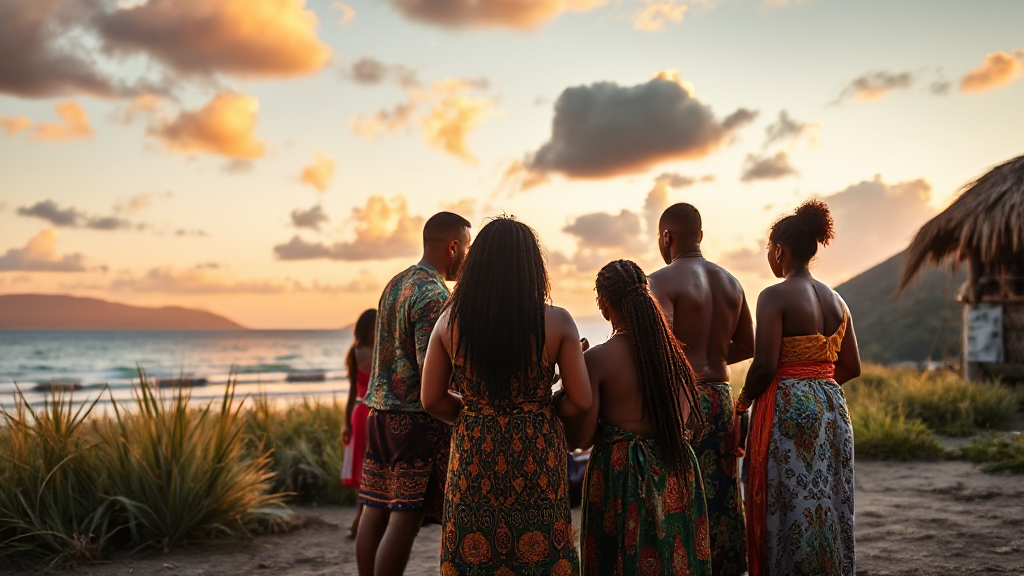
Daily life moves to its own rhythm. Markets fill with island produce, fishing remains important in many communities, and the concept of “island time” reflects a different relationship with schedules and urgency. This is not laziness, as outsiders sometimes assume, but a prioritization of relationships and presence over rigid efficiency. Adapting to that rhythm is one of the most rewarding parts of integration.
Language, Ceremony, and Everyday Belonging
Vanuatu is one of the most linguistically diverse places on earth, with over a hundred indigenous languages spoken across the islands. Bislama, a creole that grew out of plantation labor contexts, serves as the national language and the common tongue between communities. English and French remain official and are used in government and education.
For a new citizen, learning even a little Bislama is a gesture of respect that resonates. Simple greetings, expressions of thanks, and everyday phrases signal that you are making an effort to meet people where they are. You do not need fluency to be welcomed, but you do need to show willingness.
Ceremony plays a significant role in marking life transitions and community events. Custom ceremonies, church gatherings, and village celebrations bring people together and reinforce social bonds. Participation, when invited, is meaningful. It demonstrates that you see yourself as part of the community rather than a visitor passing through.
Christianity is widely practiced and deeply woven into community life, alongside customary beliefs that continue to shape attitudes toward ancestors and the natural world. Respecting both dimensions of spiritual life is part of becoming culturally literate in Vanuatu.
It is also worth remembering that citizenship by investment is a legal status, and the cultural integration that follows is a personal journey. The two are related but distinct. Paperwork can be completed in a defined timeframe; belonging unfolds over years.
What Integration Actually Looks Like for a New Citizen
Integration is not a single event. It is a series of small decisions: how you greet a neighbor, whether you attend a community meeting, how you treat the land you occupy, and whether you show interest in the stories people tell you. For a U.S. citizen who has obtained Vanuatu citizenship, these choices matter more than any document.
Dual citizenship makes this journey unusual. You are not required to abandon your American identity; you are adding another layer to it. That can feel strange at first, like wearing two coats at once. Over time, many people find that the two identities inform each other. American directness can be softened by island patience; Vanuatu’s communal ethos can temper the individualism that many Americans carry by default.
Practical integration often begins with small acts. Shopping at local markets rather than relying exclusively on imported goods. Learning the names of the people you see regularly. Asking questions about history and custom rather than assuming you already understand. Supporting local businesses and artisans. These gestures accumulate.
It also helps to be patient with yourself. You will make mistakes. You may misread a social cue or say something that lands awkwardly. The response in most communities is gentle correction rather than exclusion, provided your intentions are sincere. Humility goes a long way.
Some new citizens choose to spend extended time in Vanuatu, while others maintain a base abroad and visit periodically. Either approach can work, but the depth of integration will naturally reflect the time and attention invested. There is no shortcut to belonging.
A Citizenship That Grows With You
Ultimately, becoming a Vanuatu citizen is not only about acquiring a second passport or expanding travel options. It is an invitation to enter into a relationship with a place and its people. That relationship asks something of you: curiosity, respect, and a willingness to learn. In return, it offers something increasingly rare in a fast-moving world, a sense of connection to land, community, and tradition that has endured for generations.
For Americans considering this path, the practical details matter, and they should be researched carefully through reliable sources. But the cultural dimension deserves equal attention. A passport can be issued in months; a sense of belonging is built over years, through conversations, ceremonies, shared meals, and the quiet accumulation of familiarity. That is the deeper story of citizenship, and it is the one that stays with you long after the paperwork is filed.


Leave a Reply